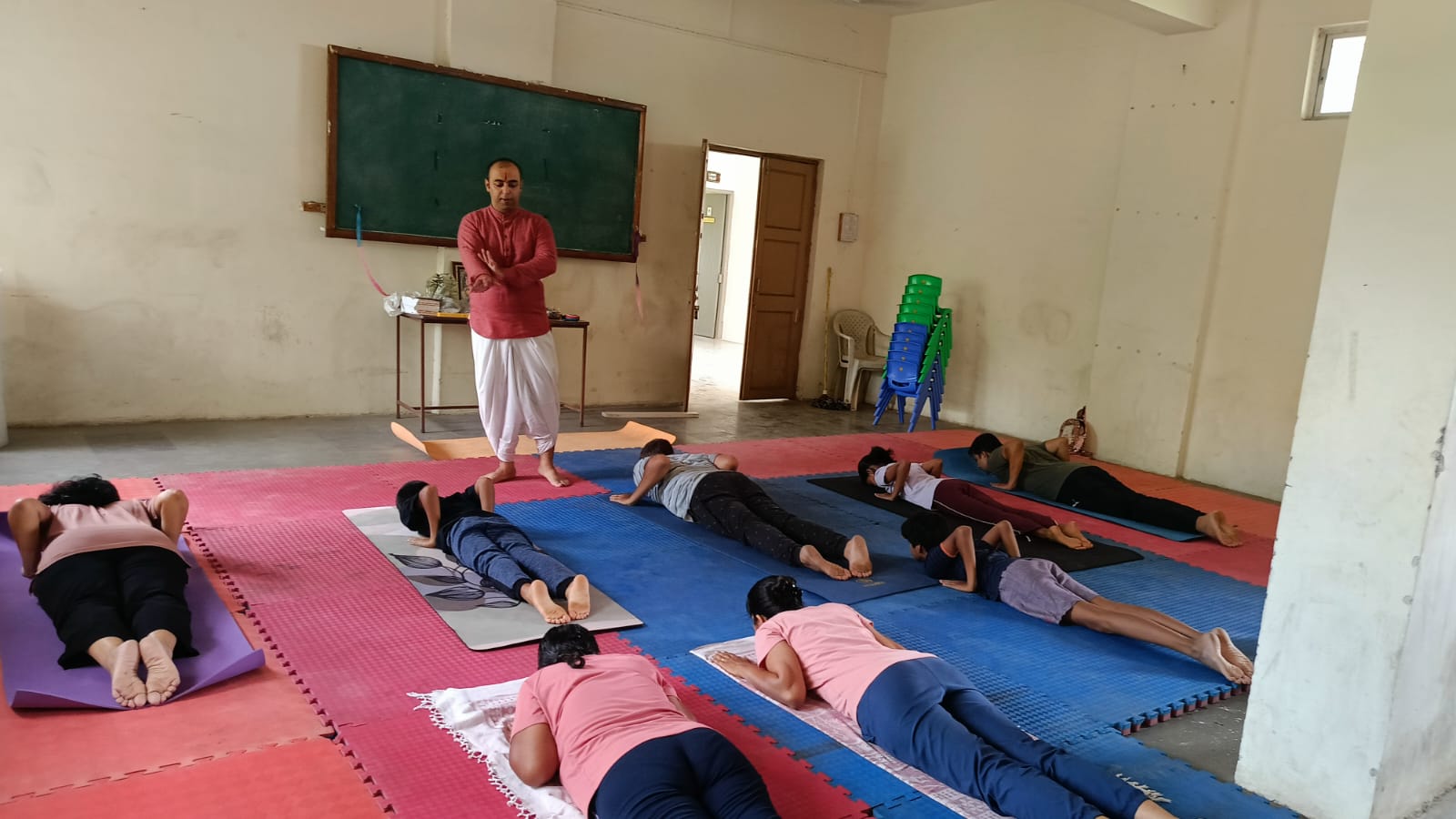
Yoga, in its original sense, is not a workout. It is a deliberate, careful method to integrate body, breath and mind — codified most famously by the sage Patanjali in the Yoga Sutras, but practised in unbroken lineages across India for millennia. To practise traditional yoga is to accept that the body is the entry point, not the destination.
The Eight Limbs of Patanjali
Patanjali described yoga as chitta vritti nirodhah — the cessation of the fluctuations of the mind — and offered an eight-fold path. Each limb is a practice in itself; together, they make the yogi.
- 01
Yama
Ethical disciplinesNon-violence, truth, non-stealing, moderation and non-possessiveness — yoga's relationship to the world.
- 02
Niyama
Personal observancesCleanliness, contentment, austerity, self-study and surrender — yoga's relationship to the self.
- 03
Asana
PosturesSteady, comfortable seats. The body prepared as a vessel for breath, focus and stillness.
- 04
Pranayama
Breath regulationConscious control of life-force through deliberate inhalation, retention and exhalation.
- 05
Pratyahara
Withdrawal of the sensesDrawing attention inward, releasing dependency on external sensory stimulation.
- 06
Dharana
ConcentrationOne-pointed focus — the mind gathered, no longer scattered.
- 07
Dhyana
MeditationUninterrupted flow of awareness toward a single object — concentration matured.
- 08
Samadhi
AbsorptionThe dissolving of the observer into the observed. The aim of the entire path.
Lineage matters
Yoga without lineage is gymnastics in pyjamas. Whether Hatha, Ashtanga, Iyengar or Vinyasa, each authentic stream traces back to a teacher, a text, and a context. At Shivoham we honour that — every asana we teach is cross-referenced with the manuscripts Mayur studied during his Manuscriptology diploma, ensuring that what you learn is not a westernised derivative, but the practice as it was intended.
Why pranayama is non-negotiable
Most modern yoga skips breath work entirely. Traditional yoga refuses to. The breath is the bridge between the autonomic and the conscious mind — train it, and you can change your physiology at will. Every full Shivoham class includes a deliberate pranayama segment.
Manuscriptology — yoga at its source
Manuscriptology is the scholarly discipline of locating, reading and interpreting ancient handwritten texts. Mayur's diploma in this field is what gives Shivoham its unusual depth: rather than referencing a textbook summary, his teaching draws on the very shastras — the source material — preserving subtlety often lost in translation.
"अहं ब्रह्मास्मि — I am the absolute. Yoga reminds you of this, again and again."
Begin a traditional practice